Beyond the Genetic Blueprint: The Organismal Control of Fate


How Epigenetics Facilitates Organismal Control
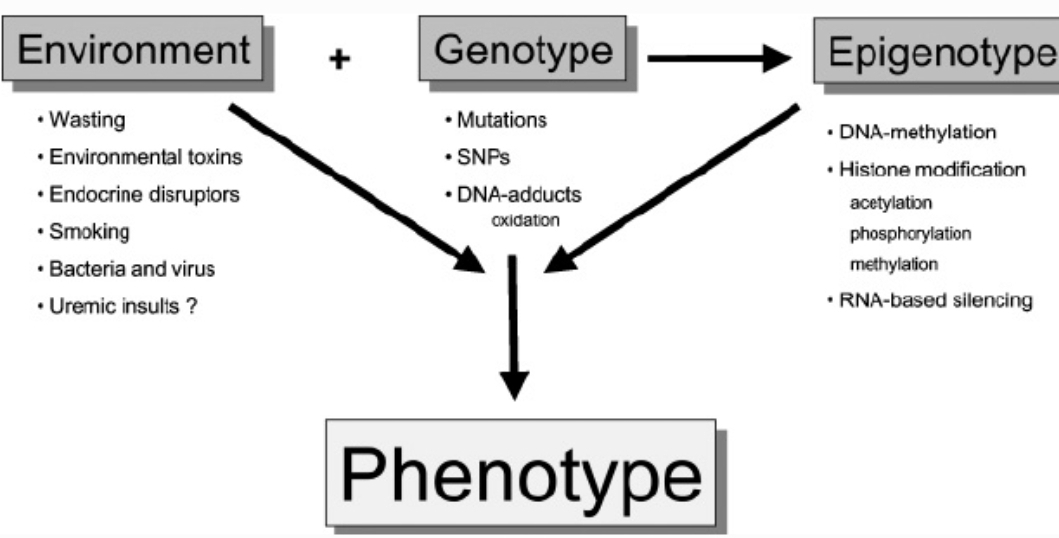
Epigenetics is the bridge between the environment and the genetic code. While the DNA sequence (the genome) remains largely constant throughout an individual's life, the "epigenome" consists of chemical markers such as methyl groups and histone modifications that determine which genes are turned "on" or "off."

The article argues that this system allows the organism to "control" its genome in several key ways:
Responsive Adaptation: The organism senses external stimuli (nutrition, stress, social interaction) and internal states (hormonal shifts, metabolic needs).

In response, it utilizes epigenetic mechanisms to reconfigure gene expression. For instance, in the context of a "rewardful life," the regulation of dopamine receptor genes through methylation can determine an individual’s susceptibility to Reward Deficiency Syndrome (RDS).

The Genome as a "Highly Sensitive Organ":

Borrowing from Barbara McClintock’s vision, the genome is viewed not as a passive data storage unit, but as a reactive organ of the cell. The organism uses epigenetic tools to reorganize its genomic output to meet the challenges of its environment.
Molecular Memory: Epigenetic changes can be mitotically stable, meaning the organism "remembers" past experiences at a cellular level.

This allows for long-term physiological tuning, such as the immune system's memory or the brain's plasticity in response to learning and trauma.
By modulating the epigenome, the organism ensures that it is not a slave to its inherited code but an active participant in its phenotypic expression.
Challenging the Modern Synthesis
The "Modern Synthesis" (the mid-20th-century unification of Darwinian selection and Mendelian genetics) has dominated biological thought for decades.

It posits that evolution proceeds through the gradual accumulation of random genetic mutations, which are then filtered by natural selection. This view is inherently "gene-centric," treating the organism as a "survival machine" for its selfish genes.
The perspective championed in this article presents a direct challenge to the Modern Synthesis on three fronts:
1. Directionality vs. Randomness
The Modern Synthesis relies on random mutation as the sole source of variation. However, the concept of the "organism controlling the genome" suggests that variation can be directed or "facilitated." If organisms can induce specific epigenetic changes in response to environmental pressure, then adaptation is not just a lucky roll of the dice; it is a physiological response.
2. The Central Dogma and Information Flow

The Modern Synthesis adheres strictly to the "Central Dogma," where information flows one way: DNA > RNA > Protein. The new paradigm suggests a circular or "systems biology" flow.
The organism (the whole) influences the DNA (the parts) through feedback loops. This "Biological Relativity," as described by Denis Noble, implies there is no privileged level of causation; the genome does not "cause" the organism more than the organism "causes" the state of the genome.
3. Inheritance of Acquired Characteristics
Perhaps most controversially, the article aligns with the "Extended Evolutionary Synthesis" by acknowledging transgenerational epigenetic inheritance.
While the Modern Synthesis dismissed Lamarckian ideas (the inheritance of acquired traits), evidence now shows that environmental stressors experienced by one generation can leave epigenetic marks that affect the phenotypes of offspring.
This bypasses the slow process of genetic mutation and selection, allowing for much more rapid evolutionary "learning."
The Blueprint for a Rewardful Life
The shift from "Genes as Blueprint" to "Organism as Controller" has profound implications for human health and the pursuit of a "rewardful life." If we are the masters of our genomic expression, then our behaviors, environments, and even our psychological states take on a new level of biological importance.
In the context of Reward Deficiency Syndrome (RDS)—a condition linked to addictive, impulsive, and compulsive behaviors—this paradigm offers hope. A gene-centric view might suggest that someone with a "low-dopamine" genetic profile is destined for struggle. However, the epigenetic view suggests that through environmental enrichment, "pro-dopamine" regulation, and behavioral interventions, the organism can "silence" problematic genetic tendencies and "activate" pathways conducive to well-being.
Conclusion
The article serves as a call to move beyond the deterministic "dogma of the 20th century." By admitting that the organism controls the genome via epigenetic software, we move toward a more holistic biology. This "New Biology" recognizes that while the genome provides the alphabet, it is the organism—interacting with its world—that writes the story of its life. Evolution is not just a history of random accidents, but a narrative of active, responsive agents striving for a state of reward and balance.



Comments
Post a Comment