The Biological Echo: How Mass Extinctions Shape the Epigenetic Future

Psalm 104
All creatures look to you to give them their food at the proper time. When you hide your face, they are terrified. When you take away their breath, they die and return to the dust. When you send your Spirit, they are created, and you renew the face of the ground.
Throughout Earth's history, the "Big Five" mass extinction events have acted as more than just scythes cutting through the tree of life; they have served as profound "biological resets." While traditional evolutionary theory focuses on how these catastrophes prune genetic diversity, a burgeoning field of study suggests that the survivors of these events carry a hidden legacy. This legacy is not written in the DNA sequence itself, but in the epigenetic architecture—the chemical switches that determine how genes are expressed.
When a planetary-scale disaster occurs, it doesn't just kill; it forces the survivors into a state of extreme physiological stress. This stress leaves a "molecular scar" that can persist for generations, fundamentally shaping the trajectory of future species.
1. The Crucible of Stress: Epigenetic Reprogramming
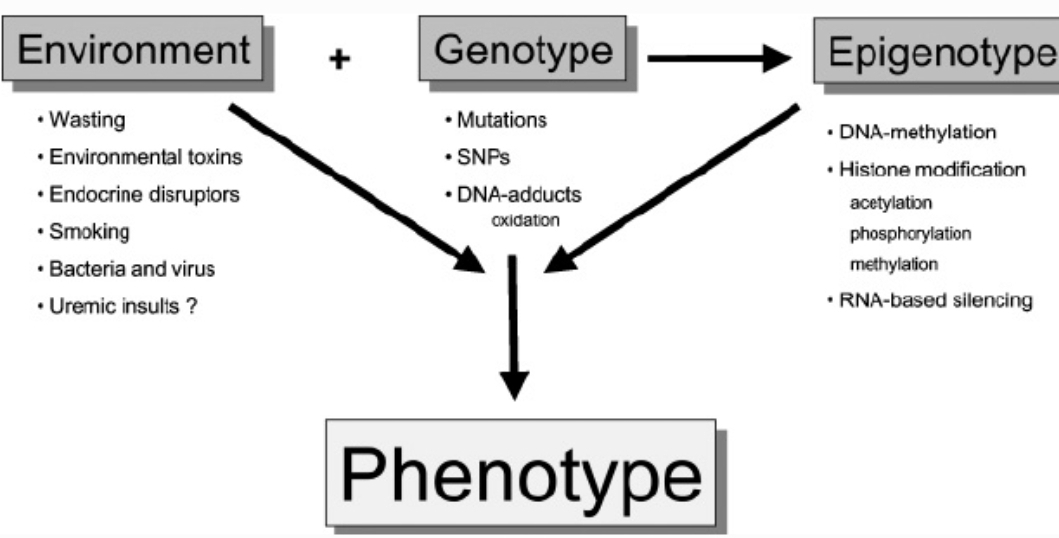
A mass extinction event, whether triggered by an asteroid impact or volcanic-induced climate change, creates a high-pressure cooker for the survivors. Under normal conditions, epigenetic marks—such as DNA methylation and histone modification—are relatively stable. However, extreme environmental toxins, radiation, or starvation can trigger "epigenetic reprogramming."

During these bottlenecks, organisms that can rapidly toggle their gene expression without waiting for a lucky genetic mutation have a distinct advantage. These "epimutations" allow for phenotypic plasticity, enabling a species to change its physical traits or behaviors in real-time to survive a dying world.

2. Transgenerational Inheritance: The Long Shadow
The most fascinating aspect of extinction-level stress is its ability to be inherited. Research into "transgenerational epigenetic inheritance" shows that environmental trauma experienced by an ancestor can alter the germline (sperm and eggs).

In the wake of an extinction, the survivors pass down an "epigenetic memory" of the catastrophe. This means that future generations are born "pre-programmed" to handle instability. For example, if a mass extinction was characterized by extreme heat, the descendants of the survivors might possess methylated genes that keep their metabolism in a permanent state of high-temperature resilience, even after the planet cools. 
3. Filling the Void: Adaptive Radiation

When a dominant group like the dinosaurs vanishes, they leave behind vast, empty ecological niches. The surviving lineages—such as ciclid fish—undergo adaptive radiation.
Epigenetics acts as the engine for this rapid diversification. Because epigenetic changes occur much faster than genetic mutations, they allow survivors to "experiment" with new forms and functions at an accelerated pace. A lineage of generalist survivors can split into specialists (climbers, swimmers, diggers) through different epigenetic configurations of the same ancestral genome. This "epigenetic priming" allows life to reclaim a devastated planet with astonishing speed.
4. The "Court Jester" vs. The "Red Queen"

In evolutionary biology, the Red Queen hypothesis suggests species must constantly evolve just to keep pace with their neighbors. Conversely, the Court Jester hypothesis suggests that large-scale abiotic shocks (extinctions) are the primary drivers of change.
Multiple extinction events reinforce the "Court Jester" model by repeatedly stripping away specialized, "fine-tuned" epigenetic profiles and replacing them with rugged, flexible ones. Each mass extinction event "toughens" the global biosphere, selecting for lineages that possess the most robust epigenetic machinery. We are the descendants of the most flexible survivors in history; our own epigenetics is a patchwork of responses to ancient fires, freezes, and famines.
5. Historical Signatures in the Modern Genome
Today, scientists can see the echoes of ancient extinctions in the way our own genes are regulated. Some researchers argue that the high prevalence of certain metabolic traits in modern humans—such as the ability to store fat efficiently—may be an epigenetic "hangover" from past periods of global resource collapse. By studying these ancient "epigenetic scars," we gain a better understanding of how life survives the unthinkable.
In essence, mass extinctions do not just end stories; they rewrite the grammar of life. Every time the world "restarts," it does so with a library of epigenetic lessons learned from the previous apocalypse, ensuring that the beings of the future are better equipped to endure the next.



Comments
Post a Comment