The Epigenetic Ceiling: Deep Time and the Limits of Ancestral Reconstruction

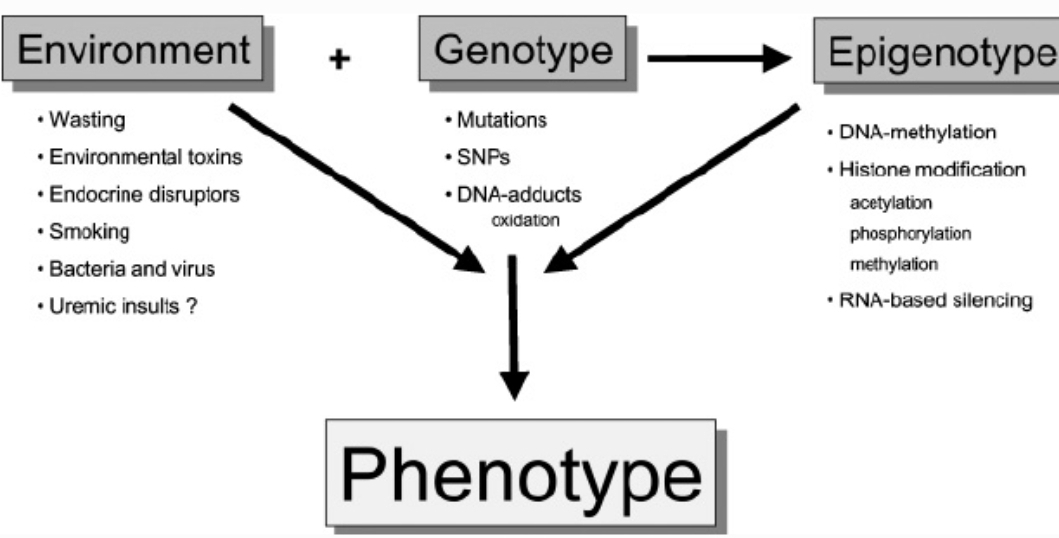
The standard narrative of evolutionary biology relies heavily on the stability of DNA. By sequencing the genomes of extant species and comparing them to ancient DNA (aDNA) recovered from specimens up to a million years old, researchers construct phylogenetic trees that trace the "descent with modification" of all life. However, a significant tension exists in this methodology: DNA provides the blueprint, but it does not account for the immediate, adaptive "scaffolding" provided by the epigenome. If phenotypic plasticity—the ability of an organism to change its physical traits in response to the environment—is driven by epigenetic tags that degrade far faster than the DNA sequence itself, our window into the true adaptive history of life is severely lopsided.
The Preservation Gap
The fundamental challenge in confirming common ancestry through a holistic biological lens—incorporating both genotype and phenotype—is the disparate "half-life" of biological information. DNA is a robust molecule. Under ideal conditions (such as permafrost), we can recover sequence data from approximately one million years ago. This allows us to see the genetic mutations that have survived the sieve of natural selection over hundreds of millennia.
In contrast, epigenetic marks, such as DNA methylation or histone modifications, are chemically fragile and inherently dynamic. These "tags" are designed by nature to be reversible and responsive to environmental stimuli. While they facilitate phenotypic plasticity—allowing a plant to adjust its leaf shape or an animal to alter its metabolic rate—they are often erased during germline reprogramming or succumb to rapid post-mortem chemical degradation. Current paleogenetic techniques can rarely reconstruct reliable methylomes beyond 100,000 years, and even then, only in exceptional circumstances.
Phenotypic Plasticity as the "Hidden" Evolution

The inability to track epigenetic tags into deep time creates a "reliance bias" on DNA. This bias potentially masks the role of phenotypic plasticity in the origin of species. According to the "plasticity-first" hypothesis, an environmental change might first trigger a plastic, epigenetic response in a population. If this new phenotype is successful, adaptation later "fixes" the trait into the DNA sequence through a process called genetic assimilation.

When we look at the million-year DNA record, we see the final, fixed result—the mutation. What we miss is the preceding 100,000+ years of epigenetic experimentation that may have actually driven the evolutionary change. Because we cannot see the "epigenetic scaffolding" that existed prior to genetic fixation, we are tempted to view evolution as a series of lucky genetic accidents rather than a directed response to environmental pressures.
The Conflict of Common Ancestry
This data gap complicates the confirmation of common ancestry in three specific ways:
The Problem of Convergence: Without the epigenetic history, it is difficult to distinguish between two species that share a common ancestor and two species that simply evolved similar plastic responses to similar environments (homoplasy). If phenotypic plasticity can produce identical forms through different epigenetic pathways that eventually fix into DNA, the "tree of life" becomes more of a tangled web.
The Loss of "Soft" Inheritance: If significant adaptive information was passed down through transgenerational epigenetic inheritance for thousands of years before being lost or converted to genetic code, the DNA-only record provides an incomplete pedigree. We are essentially reading a book where every fifth chapter has been bleached white.
Deep Time Blindness: Since the "tags" that cause plasticity vanish after 100,000 years, any claims about the common ancestry of major phyla (which occurred hundreds of millions of years ago) rely entirely on the genetic "blueprint." We have no way to verify if the common ancestor shared the same plastic potential or if its "lifestyle" was governed by epigenetic mechanisms we can no longer detect.

The Temptation of Genetic Determinism
The relative abundance of DNA data compared to the scarcity of ancient epigenetic data makes it intellectually tempting to default to genetic determinism. It is far easier to build a model based on the million-year sequence we can read than to account for the ephemeral chemical tags we cannot see. However, this creates a skewed version of natural history.
By relying solely on DNA, we treat the organism as a static output of a code. In reality, the organism is a dynamic participant in its environment, using epigenetic mechanisms to navigate survival in real-time. The "100,000-year ceiling" for epigenetics means that for 99% of evolutionary history, we are blind to the very mechanisms that allow life to be flexible.
Conclusion
Confirming common ancestry requires more than just matching sequences; it requires understanding how those sequences were expressed across shifting eons. The disparity between the million-year DNA record and the 100,000-year epigenetic record leaves a massive void in our understanding of phenotypic plasticity. Until we find a way to peer through the "epigenetic veil" of deep time, our reconstructions of common ancestry will remain powerful, but potentially incomplete, sketches of life's true history.



Comments
Post a Comment