Epigenetics as the Engine of Non-Random Creative Design beyond Evolutionary Creationism

The traditional dialogue between theology and biology has often been framed as a choice between a distant, "clockmaker" God or a series of disjointed, miraculous interventions. Evolutionary Creationism (EC) seeks to bridge this gap, yet it frequently struggles to define the "theistic" element without relegating God to the role of a passive observer of random mutations. However, the burgeoning field of epigenetics, the study of heritable changes in gene expression that do not involve alterations to the underlying DNA sequence, offers a sophisticated framework for understanding divine action.

Beyond the "Genetic Lottery"

For decades, the Modern Synthesis of evolution relied heavily on "random mutation" as the primary engine of change. In this view, God’s involvement is often reduced to "ordained randomness," a concept that many find theologically thin. Epigenetics shifts the focus from hard-coded accidental errors to a dynamic system of biological interpretation.

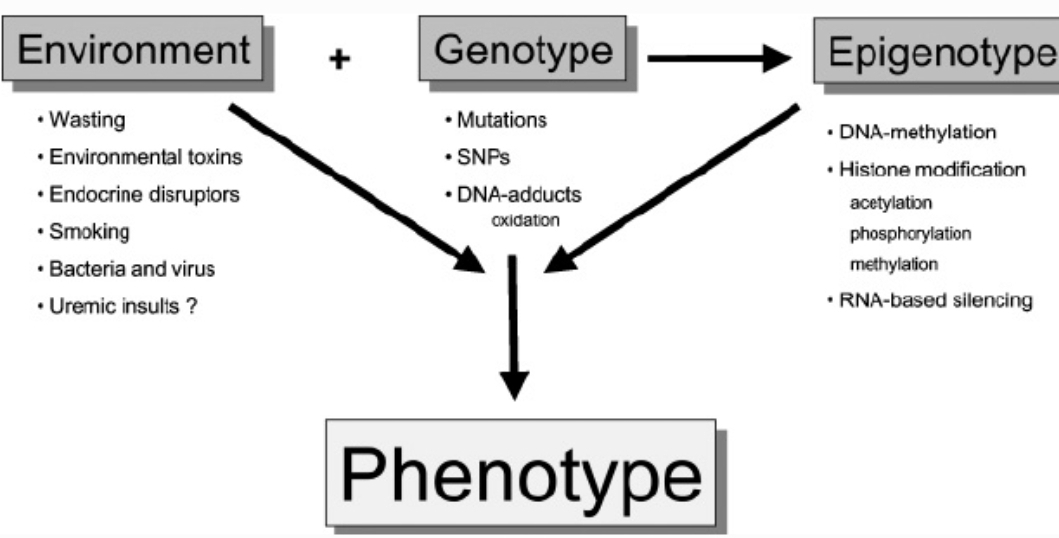
When we look at mechanisms like DNA methylation or histone modification, we see a biological system that is inherently "aware" of its environment. This suggests that life is not merely a script being read, but a conversation. From a theistic perspective, this "responsiveness" serves as a better metaphor for divine providence. Rather than God intervening to "fix" a broken genetic code, the epigenetic layer acts as a built-in capacity for life to respond to the conditions of the world. This aligns with the idea of a Creator who endows creation with a "functional integrity" the ability to adapt and flourish through its own internal logic.
The Theological Advantage of Phenotypic Plasticity

One of the greatest challenges for Creative evolution is the problem of "waste" and "cruelty" in the trial-and-error nature of neo-Darwinism. If evolution is purely a numbers game where billions must die for one advantageous mutation to occur, the "theistic" part of the equation feels cold.
Epigenetics introduces the concept of phenotypic plasticity the ability of a single genotype to produce multiple phenotypes in response to environmental cues. This mechanism allows for rapid, directed adaptation that occurs much faster than the standard "mutation-selection" timeline. 
Soft Inheritance and Purposeful Adaptation

The discovery that epigenetic marks can sometimes be passed down through generations often called "soft inheritance" challenges the strict "Weismann Barrier," which argued that environmental experiences cannot influence heredity. 
If an organism’s life experiences can shape the biological future of its offspring, the evolutionary process begins to look less like a series of accidents and more like a cumulative journey. This resonates with the biblical theme of "generational" effects and the idea that the physical world is a place where history and experience matter. It allows the "theistic" component of TE to be viewed as a guiding influence that respects the agency of the creature and the integrity of the environment, rather than a top-down imposition of will.
Divine Immanence in the Molecular "Quiet"
In classic theism, God is described as the "Primary Cause" who works through "secondary causes" (the laws of nature). Epigenetics provides a clearer look at how these causes might meet. The "epigenome" acts as a mediator between the unchanging DNA (the Word) and the shifting environment (the World).
This mediation is where epigenetics finds its strongest footing. If God is "in all things," then His action is not necessarily found in the dramatic rewriting of genetic code, but in the subtle "silencing" or "activating" of genes. 
Conclusion
Epigenetics moves creation evolution from the charge of being "deism with a biological coat of paint." By showcasing a world of directed responsiveness, latent potential, and heritable experience, it offers a biological framework that mirrors the theological concepts of providence and immanence. It allows us to view the "theistic" in theistic evolution not as a distant programmer, but as the source of a living, breathing, and deeply responsive system of life.



Comments
Post a Comment