The Epigenetic Architecture of Sexual Orientation: A New Evolutionary Paradigm

In their seminal 2012 paper, “Homosexuality as a Consequence of Epigenetically Canalized Sexual Development,” William R. Rice, Urban Friberg, and Sergey Gavrilets proposed a groundbreaking solution. Moving away from the hunt for a "gay gene," they argued that homosexuality is not driven by DNA sequences themselves, but by epi-marks—epigenetic regulators that normally ensure "canalized" (stable) sexual development but occasionally carry over across generations to produce same-sex attraction.
How Epigenetics Shapes Sexual Development
To understand this theory, one must first look at how a fetus becomes "male" or "female" beyond simple XX or XY chromosomes. While genes provide the blueprint, the actual construction of sexual traits (genitalia, brain structure, and behavior) is heavily influenced by androgens like testosterone.
1. The Role of Canalization

Developmental biology uses the term canalization to describe the process by which an organism’s development is buffered against fluctuations. In the womb, testosterone levels vary wildly. A female fetus might be exposed to unusually high levels of testosterone from the mother’s endocrine system, while a male fetus might be exposed to unusually low levels.
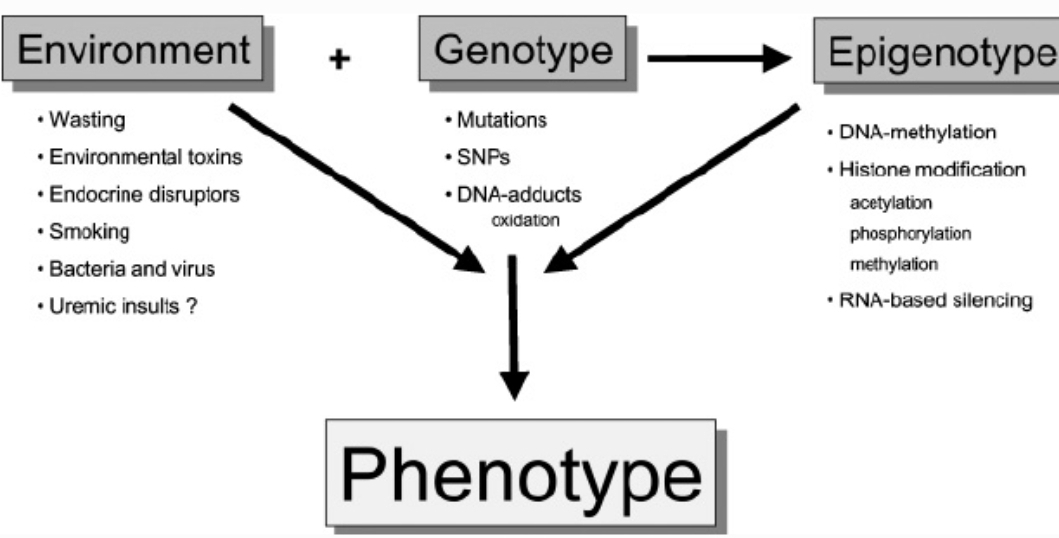
To prevent these "hormonal blips" from sex-reversing the fetus, the body creates epi-marks. These are chemical modifications (like DNA methylation or histone acetylation) that act as "dimmer switches" for gene expression.
In Males: Epi-marks are produced to increase sensitivity to testosterone, ensuring that even if levels are low, the body and brain develop in a male-typical direction.
In Females: Epi-marks are produced to decrease sensitivity to testosterone, protecting the female fetus from masculinization even if testosterone levels are high.
2. Sexually Antagonistic Epi-marks
The authors call these "Sexually Antagonistic" (SA) epi-marks. They are "antagonistic" because an epi-mark that is highly beneficial for a father (making him more male-typical) would be "antagonistic" or harmful if it were expressed in his daughter (making her more male-typical).
3. The Mechanism of Transgenerational Carryover
Normally, these epi-marks are "erased" during early embryonic development so that the next generation can start with a clean slate and produce their own sex-specific marks. 
When a father’s "masculinizing" epi-marks are passed to a daughter, or a mother’s "feminizing" epi-marks are passed to a son, they interfere with the offspring's natural development. For example, a son who inherits his mother's epi-marks may have reduced sensitivity to testosterone in specific brain regions governing sexual preference. This results in a "mosaic" phenotype: the individual has male genitalia (governed by one set of genes/marks) but female-typical sexual preference (governed by the inherited epi-marks).
Challenging the Modern Synthesis
The Modern Synthesis is the 20th-century consolidation of Darwinian evolution and Mendelian genetics. It posits that evolution occurs primarily through changes in the frequencies of gene variants (alleles) within a population. The Rice et al. paper challenges this framework in three fundamental ways:
1. From "Gay Genes" to Regulatory Switches
For decades, researchers searched for a "gay gene" through Genome-Wide Association Studies (GWAS) but found only weak correlations. The Modern Synthesis struggles to explain homosexuality because any gene that significantly reduces reproduction should be purged from the gene pool by natural selection.
Rice and his colleagues argue that we haven't found the gene because the gene doesn't exist. Instead, the "heritability" of homosexuality seen in twin studies is actually the inheritance of the regulatory state of genes, not the genes themselves. This shifts the focus from "what the code is" to "how the code is read."
2. The Persistence of "Low-Fitness" Traits
Under a strict Modern Synthesis view, traits that reduce fitness are evolutionary "dead ends." However, the epigenetic model explains why homosexuality remains common. The genes that produce these epi-marks are actually selected for because they increase the fitness of the parents (by ensuring they develop "correctly" as male or female).
Because the "failure to erase" the mark happens only occasionally, the massive benefit the genes provide to the parents outweighs the occasional reproductive cost to the offspring. This allows the mechanism to persist indefinitely in the human population without the need for complex theories like "kin selection" (the idea that gay individuals help their relatives' children).
3. Non-Mendelian Inheritance
The Modern Synthesis relies on Mendelian inheritance—the idea that traits are passed down via DNA sequences. The epigenetic model introduces Non-Mendelian, transgenerational inheritance. 
Conclusion
The theory of epigenetically canalized sexual development offers a sophisticated middle ground in the "nature vs. nurture" debate. It suggests that sexual orientation is biological and innate (nature), but governed by the regulation of genes rather than the sequence of the genes themselves (a mechanism often influenced by the environment).
By viewing homosexuality as a byproduct of a system designed to ensure robust sexual differentiation, Rice, Friberg, and Gavrilets have provided a mathematical and biological framework that respects the complexity of human sexuality while solving a century-old evolutionary riddle.



Comments
Post a Comment